


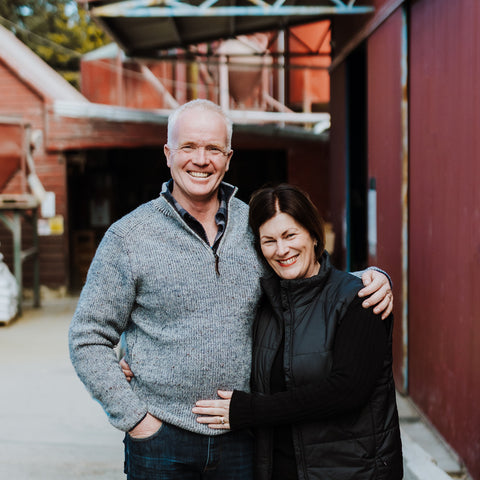
When we started our Meet the Grower series, the very first to step up was Pete Mitchell. Given he’s the fifth generation of Mitchells to farm at Rosedale, Topflite’s founding farm, and we’re celebrating a half-century of sunflower harvests this year, it was time for another catch up!
 |
 |
The Mitchell and Webster families go way back to the early days of Topflite, when they worked together to plant the first sunflowers at Rosedale Farm. These days Pete Mitchell is a director in and shareholder of Topflite as well as the lead grower of many of our central ingredients: sunflower seeds, canary seed, wheat and barley.
Pete, you must have been there for Topflite’s very first sunflower harvest. Do you remember it?
Not really – I was only eight then. I do remember some of the early harvests though.
Was it a given that you’d become a crop farmer, like your father?
Actually, I started out as a motor mechanic and completed an apprenticeship straight out of school. I qualified as an A grade mechanic and did that for six years. Looking for the next step, I was offered a job as a car salesman and knew I definitely didn’t want to do that. There was a job on the family farm when one of the tractor drivers left, which I did for six months, and then went overseas. This is what probably put me on the track to crop farming.
Where did you travel?
My parents had an informal farm exchange happening with people they had met overseas. We’ve had people from all over the world come through the farm over the years – it’s a great way to share knowledge. A farmer from Denmark and his girlfriend had been staying with us, and we got on really well so Sandra and I went over to Denmark and worked on their farm for harvest. It’s quite different there with small lease paddocks dotted all around the small communities. We were just 20 minutes from Copenhagen so we’d be driving on the motorways in tractors and combine harvesters sometimes. Sandra carted grain, painted window frames in the farm house, worked in the barn, delivered lunches to workers and things – all the stuff that keeps a farm ticking.
Bet those mechanic skills from your first job come in handy on the farm?
Yes definitely. Knowing how to fix things and problem solve is a big part of crop farming!
What would you say to someone thinking of becoming a crop farmer?
It can be very rewarding and satisfying, but also challenging. You’ve got to understand the risks of operating in an uncertain economic environment, especially around yields and weather events. So it becomes an individual choice around accepting the risks along with the rewards.
The most memorable moments for you over the years?
It was a real number 8 wire operation to begin. We used to mix seed in a concrete mixer, tipping it from bags up in the loft. We learned a lot by trial and error – you’d go out and do the conventional thing and realise it wasn’t quite working out. So, back to the yard with a bit of 4x2. Dad and I built a lot of the equipment to do the processing for Topflite, baggers and mixers and the like. That was a lot of fun. Another memory is the precision planter Dad and some other farmers imported together. It was intended for sowing beets as cattle feed but we ended sowing sunflowers with it in the 70s. I’ve enjoyed watching the business grow organically and keep adapting to new technology. I also remember our thousand-ton party in the early 2000s, when we’d sold a thousand tons through Topflite. We were very small in those days so it was a real milestone.

And now your son Henry is stepping up?
Yes, Rosedale is where I grew up and we shifted off site recently. Henry and Briar and their children live in the original family homestead now, so the next generation's coming along. He organises the day-to-day work for the five of us, so everyone knows what they're doing for the day and where and what we're going to be harvesting. Family has always been essential to the success of the operation. Sandra, my wife, has played the key role of raising the next generation, supporting our business and making it all work efficiently. Currently she does the farm administration and cooks meals for all our staff when they are harvesting into the evening.
What do you most look forward to about harvest season?
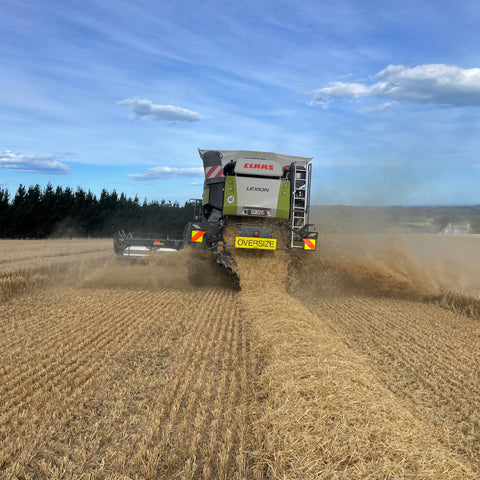
The excitement of reaping the rewards of all your efforts over the growing season. It’s our pinnacle, really. The autumn wheat, for example, was sown in April and we have to wait almost a whole year to see the yield. It’s a bit like waiting for your birthday all year as a kid and unwrapping your presents, hoping you got a good one. It’s a long wait!
Watching the harvest go out the gate with our name stamped on it is a great feeling too, something you really feel proud of. I pride myself on growing good quality – the way I see it, there's no point in just me being satisfied, it's got to be the customer at the end of the day, otherwise we won't be here next year.
Best view over the paddocks – sunrise or sunset?
Oh good question. Actually, I'm going to say early morning sunrise, you get some nice views of crops. They can look their best in the morning.
More in the Meet the Grower series
Meet Rob Hewett of Oakhill Station. A regular grower for Topflite, he contributes blue peas, maple peas and sunflowers for our aviary bird and chicken feed ranges.
Related Products


Read more from us

Seasonal Bounty: Lemons
Tart, tasty and packed with tons of vitamin C, the humble lemon is plentiful and cheap right now — and they’re much more versatile than people think.


From farm to feeder: Why buying New Zealand grown pet food matters
Here’s how buying local boosts the health of pets – and our human communities too.